
Over the past few weeks, we at RedmineUP have observed a growing trend in API requests and integrations with external tools. Our analysis shows that users are increasingly focused on making Redmine data connectable and transferable to other applications. .
The battle over user interface and experience in project management is over. Jira, Asana, Monday — same core, different skins. Now AI works with data directly. The real differentiator: clean APIs, webhooks, and machine-readable models. The question is — how will Redmine 7 hold up?
Redmine 7.0 is scheduled for 2026. Under the hood, it’s a rebuild—meant to hold up for the next ten years.The practical changes: you’ll be able to ask language models questions about your issue history directly. Routine processes will turn into automated sequences, not click-by-click chores. And your project data won’t sit in a silo anymore—it’ll work cleanly with whatever AI tools you decide to plug in. That cycle is over.
The great UI arms race
Look around at modern project management tools — Jira, Asana, ClickUp, Monday. Now compare their calendars. They look identical, right? Gantt charts, agile boards, calendars, tables — all the same. For years, these platforms fought a war over user experience and interface design.
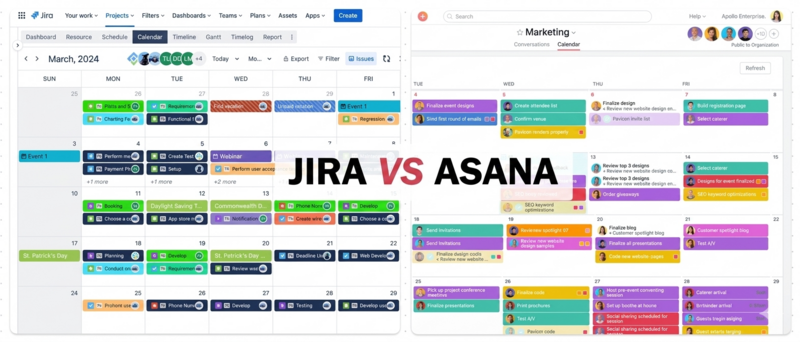
Instead of tweaking button colors or rounding corners, the focus will shift to internal database features that structure your data clearly—so AI tools can actually make use of it. Redmine 7.0 is a foundation-first release, not a UI refresh. For self-hosted instances, the breaking dependency updates and core feature additions will require more prep than usual:
- Real-time webhooks to trigger CI/CD pipelines
- OAuth2 for zero-trust security
- Structured data export for training custom models
- API-first design for agentic workflows
Three four pillars of Redmine 7.0
1. Native Webhooks (finally!)
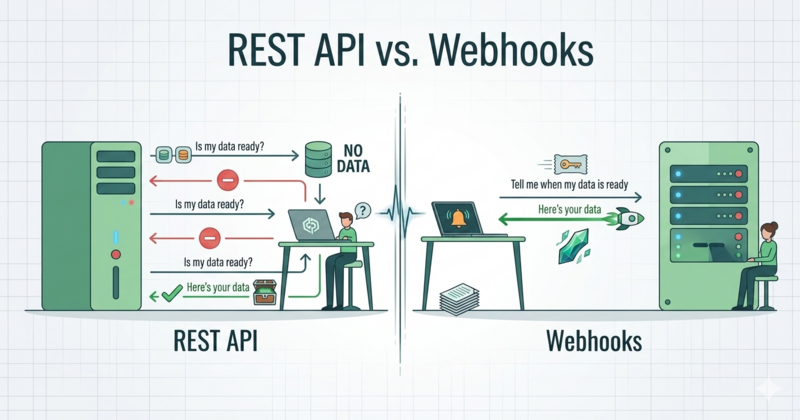
Feature #29664 adds first-party webhook support for issue events, time entries, wiki updates, and project changes. You no longer need to maintain the redmine_webhook plugin or custom forked code:
What this means for your AI infrastructure:
- Auto-trigger RAG updates: Now you have a tool that shows when RAG can be updated. The hook doesn't update it — just triggers the pipeline that does. Previously, you had to restart manually or on a timer, even when nothing had changed.
- Slack/GitHub/Jenkins integration without polling — your CI knows about new bugs before your team does.
- Custom AI agents can subscribe to events: "When a high-priority bug is created, summarize it and post to #incident-channel".
Note: With webhooks, Redmine becomes an event source instead of a static database. LLMs then receive up-to-date context the moment changes happen — not just stale data from the last scheduled index.
2. OAuth provider authentication
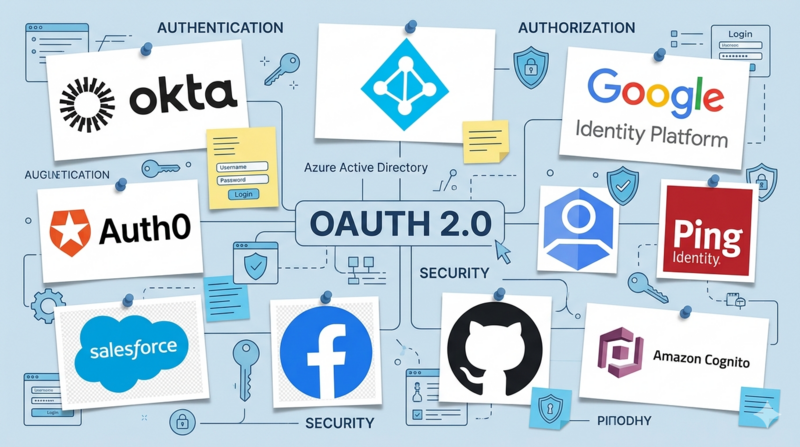
Feature #43352 brings enterprise SSO without the headache. Two OAuth2 additions kill legacy auth pain points:
- IMAP email retrieval via OAuth2 (#43023): If you fetch incoming email from Gmail, Outlook, or other providers that deprecate password auth, you can now authenticate via OAuth2 instead of storing app passwords. Set up your provider's OAuth2 app before upgrading to avoid email downtime.
- Redmine as OAuth provider / External OAuth login (#43352 ) Users can now log in via external OAuth providers, and Redmine can act as an OAuth provider for other tools. No more managing local passwords for users who already have SSO.
Machine identities are finally first-class citizens. Your automation doesn't need a dummy user account anymore.
We're proud to say that RedmineUP Cloud has offered OAuth-based authentication for over two years. Our enterprise customers have been enjoying SSO integration since 2023. Now we're genuinely glad to see core Redmine bringing this capability to the entire community.
3. Gemified plugins (optional).
You can now manage plugins as standard Ruby gems via your Gemfile and Bundler instead of copying them to the plugins/ directory. This aligns with standard Ruby workflows but breaks old install processes.
If you choose this approach, check each plugin's documentation for gem-based install instructions. To avoid downtime, test in a staging environment first.
No fluff, just actionable steps to avoid downtime:
- Upgrade Ruby to 3.2+ if you're on an older version. Verify with ruby -v.
- Audit all plugins: Unmaintained plugins will crash Redmine 7. Remove or replace them before upgrading.
- Test OAuth2 for email: If using IMAP, configure your email provider's OAuth2 app and test retrieval in a staging environment.
- Check DB adapter versions: Redmine 7 updates pg to 1.6+, sqlite3 to 2.9+, and trilogy (MySQL) to 2.12+. Ensure your adapters are compatible.
- Full backup: Rails 8 migrations may include irreversible DB changes. Snapshot your database and files/ directory before running redmine:upgrade.
- Pending migrations halt boot: Redmine 7 will refuse to start if there are pending migrations (Feature #36933). No more running in a broken state accidentally.
The UX features that actually matter
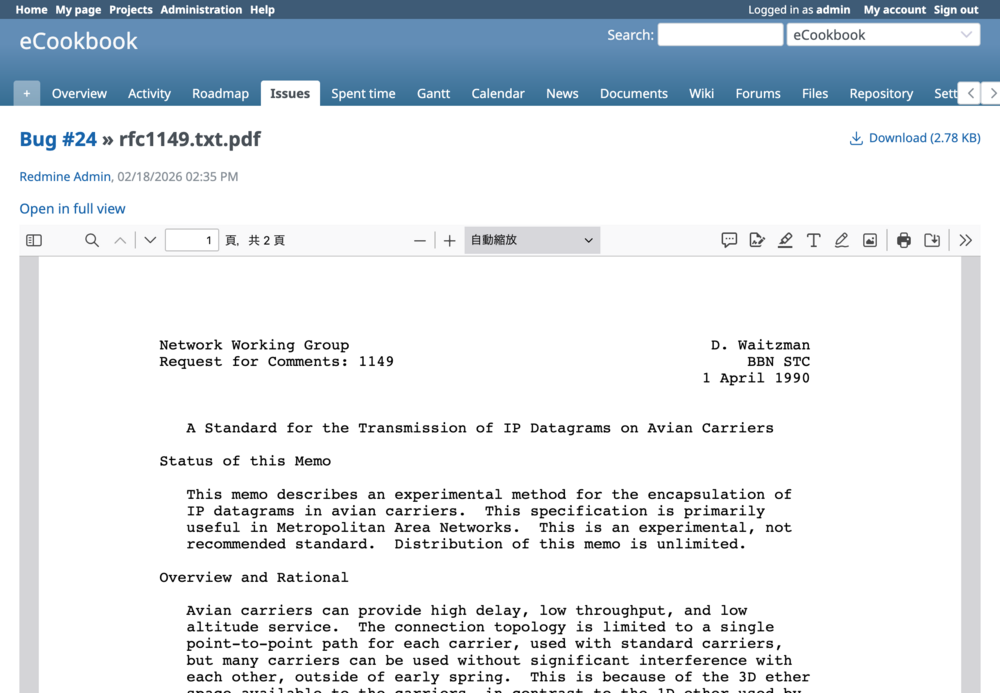
While headline features get attention, these quality-of-life improvements directly impact how well AI can consume your Redmine data:
- AVIF image support (#43943) Smaller attachments → faster processing for vision models
- PDF attachments and repo entries preview * (#22483)→ Preview capability means faster sampling without full downloads.
- Detect attachment content type from contents (#43484) No more trusting malicious MIME types; your ingestion pipeline stays secure
- Export all Wiki pages as ZIP (#43978) Bulk export your entire knowledge base for offline RAG training
- CSV export of project memberships (#37480) Easy extraction of collaboration graphs for organizational network analysis
- Track last usage of API keys (#43938) Audit which AI services are actually consuming your data
- Preserve checkbox selection in user search dialogs (#43825) Small but critical for batch operations via API wrappers
Don't Let Redmine Crash Your Project
Quick fixes, upgrades, and maintenance by certified experts
What this means for your Redmine stack?
Redmine 7 is 85% complete, landing in the next few months. For self-hosted instances (especially with RedmineUP plugins), start these prep steps today to avoid upgrade downtime:
- Upgrade runtime early: Redmine 7 mandates Ruby 3.2+ and Rails 8. Move to Ruby 3.2+ now, test all RedmineUP plugins on latest 6.x to catch deprecation warnings before the switch.
- Retire webhook workarounds: Migrate from third-party webhook plugins to Redmine 7's native webhook support (#29664) now. Start with Helpdesk/CRM alerts to Slack or n8n to validate flows before upgrade.
- Switch to OAuth2: Replace basic auth API keys and configure IMAP OAuth for Helpdesk email. Redmine 7 tracks key last usage (#43938) — audit stale access now.
- Clean your dataset: Remove unused custom fields, deduplicate issues. Redmine 7 halts boot on pending migrations (#36933), and its workflow performance fixes (#43957) work best on clean data.
What AI workflows are you planning? Tell us in the comments. We'll share migration guides and example agents as the release date approaches.