
If there's one product that defines the ticketing system category, it's Zendesk. Since 2007, it has shaped the modern customer support model—email-to-ticket conversion, multi-channel support, SLA management, and knowledge bases all became standard because of it. .
But as we move through 2026, many organizations are questioning whether Zendesk still makes sense for them. The reasons are familiar: rising per-agent costs that escalate quickly as your team grows, limited deep customization, and concerns about data sovereignty when customer information lives on someone else's servers .
Enter open source alternatives. These platforms offer full control over your data, no per-agent fees, and the freedom to customize everything—but they also require technical expertise to maintain . The question is: which one is right for you?
In this guide, we'll evaluate the best open source Zendesk alternatives based on real-world criteria: ticketing maturity, knowledge base capabilities, automation, permissions, and—increasingly important—AI readiness .
Open source software is not only widely adopted by companies but is also playing an increasingly pivotal role in defining enterprise software architectures. A significant majority of IT departments—as many as 80%—plan to expand their use of open source software over the next year. This momentum is reinforced by the fact that 95% of IT specialists now view open source as strategically important to their operations
Why consider an Open source Zendesk alternative?
Before jumping into which tools to pick, let’s take a moment to talk about what you're actually getting into with open source.
The benefits of open source are hard to ignore:
- Cost savings. Most open source software is free to download and use—no per-agent monthly fees. In fact, surveys show that about 31% of organizations say the proprietary alternative would cost them four times as much.
- Data sovereignty. Since you're hosting everything on your own infrastructure, your customer data stays under your control. No handing it over to a third party.
- Customization. You’ve got the source code, so you can tweak pretty much anything—add features, adjust workflows, or make it fit your existing systems like a glove.
- Transparency. You can actually go through the code yourself if you want to check for security issues or just see how something really works under the hood.
- Community-driven development. These projects aren’t built in a silo—developers from all over the world contribute, which often means faster updates and more diverse input.
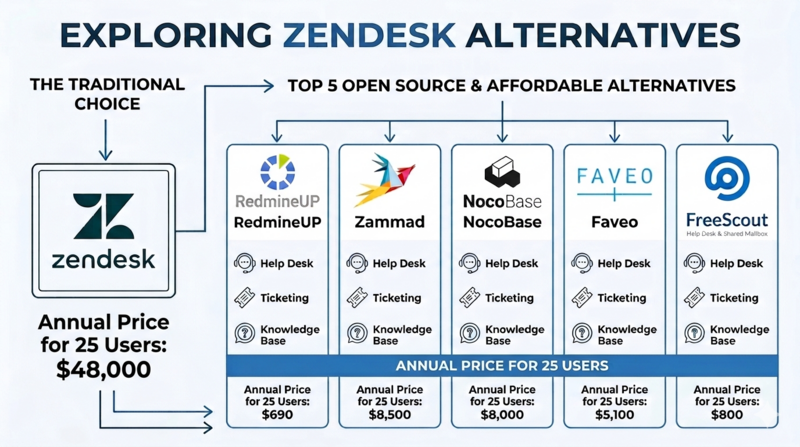
For context, a proprietary tool like Zendesk would run you about $48,000 a year for 25 users. So the difference in cost is pretty significant.
Open-source Jira Service Management alternatives
The best alternative for you depends on your team’s specific needs. Do you need a simple helpdesk, a full-fledged ITSM suite with asset management, or a platform that blends project management with service desk functions?
1. RedmineUP Helpdesk
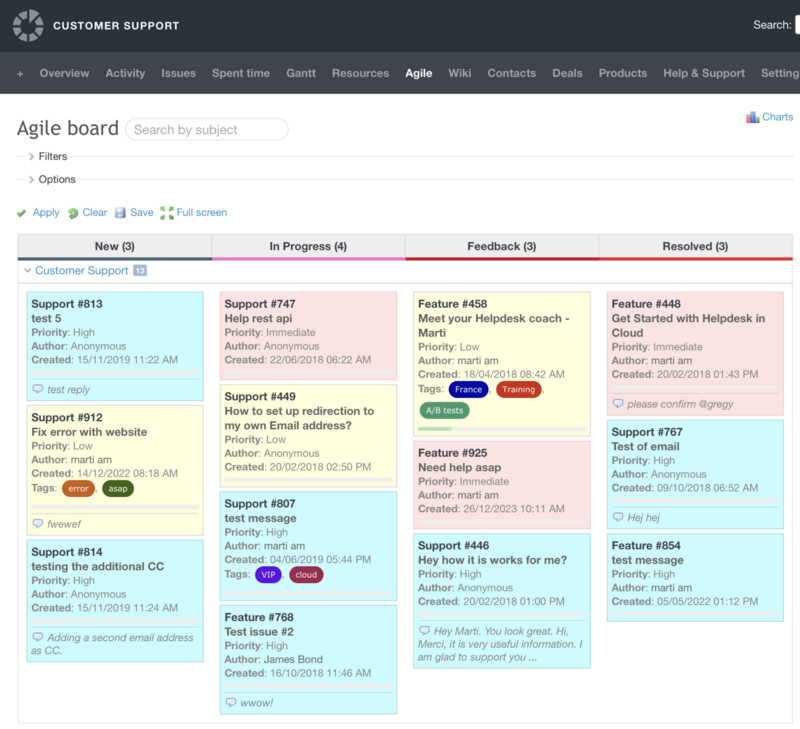
For teams that love the stability and flexibility of the open-source Redmine core but need a more polished, feature-rich experience comparable to Jira, RedmineUP is the perfect solution. RedmineUP is not a separate fork, but rather a company that provides a suite of premium plugins and a pre-configured distribution (the RedmineUP Stack) that transforms vanilla Redmine into a powerful commercial-grade tool.
While Redmine itself is free and highly customizable, it requires technical know-how to set up and extend. RedmineUP bridges this gap by offering polished, well-supported plugins for essential business functions like a professional Helpdesk (with email ticket creation and canned responses), CRM, Inventory & Asset Management, and Invoicing. The RedmineUP Stack packages the Redmine core with these plugins, giving you a solution that feels more like an out-of-the-box product while retaining the open-source foundation. This makes it an ideal choice for teams who want the power of Redmine without the heavy lifting of assembling it themselves.
Discover how to turn the familiar flexibility of Redmine into a powerful engine for ITIL best practices. Our new series breaks down exactly how to customize Redmine for incident, problem, change, and request management.
Dimitar Chervenakov At RedmineUP, we have weekly stand-up meetings where we go over the results of customer support metrics. During the meeting, we talked about the main things we're tracking in our service to figure out what we can do better next week to give our customers a better experience. One of the most important things we look at is the customer satisfaction rate.
If your support team is drowning in tickets and struggling to collaborate, it’s time for an upgrade. You don’t need new software—you need a new strategy. Learn how to turn your basic Redmine setup into a high-performance Agile Helpdesk.
The price for 25 users is $690 per year. (RedmineUP Cloud).
Create a free RedmineUP account
2. Faveo Helpdesk
If your service desk needs to be tightly integrated with complex project management, OpenProject is arguably the most direct open-source alternative to Jira. It provides a unified platform for classic and agile project management, including features like interactive Gantt charts, Agile boards, time and cost tracking, and budget management.
For teams migrating from Jira, OpenProject offers a familiar yet streamlined experience. It handles everything from issue tracking to roadmaps, and importantly, it provides both cloud and self-hosted editions, giving you complete data sovereignty. A community-driven Jira importer script is even available to facilitate a smooth transition. OpenProject is a future-proof choice that combines enterprise-grade features with the transparency of open-source.
Ideal for: Organizations needing a strong blend of project management and service desk capabilities, including software development teams, public bodies, and large enterprises. Key Strengths: Full Gantt charts, integrated time and cost tracking, Agile boards, on-premises option, and a Jira import tool.
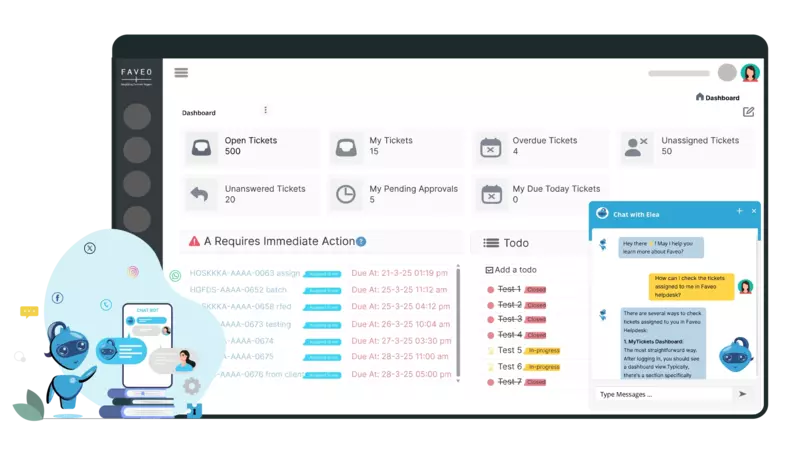
The price for 25 users is $3600 per year. (Faveo Cloud).
3. NocoBase
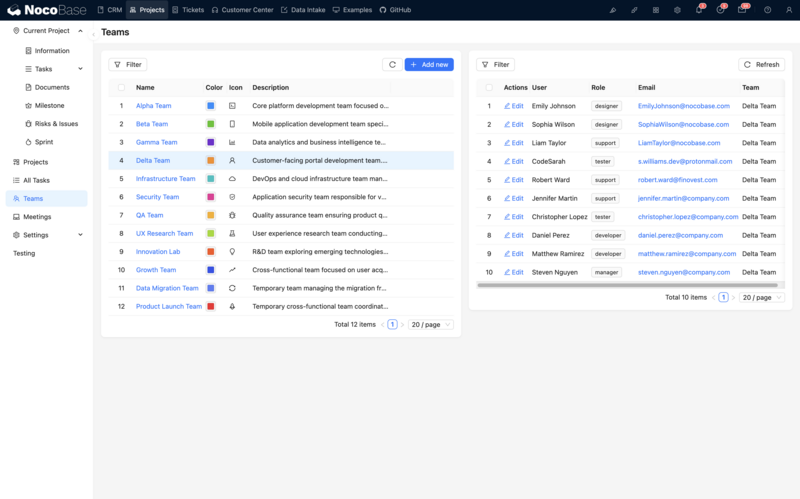
What if you need a service management platform that perfectly matches your unique workflows, but you don't want to code everything from scratch? NocoBase offers a novel approach: it's an open-source, no-code/low-code platform that lets you build your own custom solution.
Instead of adapting your processes to Jira's logic, you can use NocoBase’s visual data modeling and plugin-based architecture to construct a system that fits you perfectly. You can define your own data models for assets and tickets, design complex approval workflows, and create custom dashboards—all without touching code. For teams with unique requirements that don't fit neatly into off-the-shelf ITSM tools, NocoBase provides the ultimate flexibility.
Ideal for: Teams with complex or unique business processes who want to build a tailored service management application quickly. Key Strengths: Highly extensible plugin architecture, visual data modeling, built-in workflow automation, and the power of a no-code platform with open-source freedom.
Create a free NocoBase account
4. Zammad
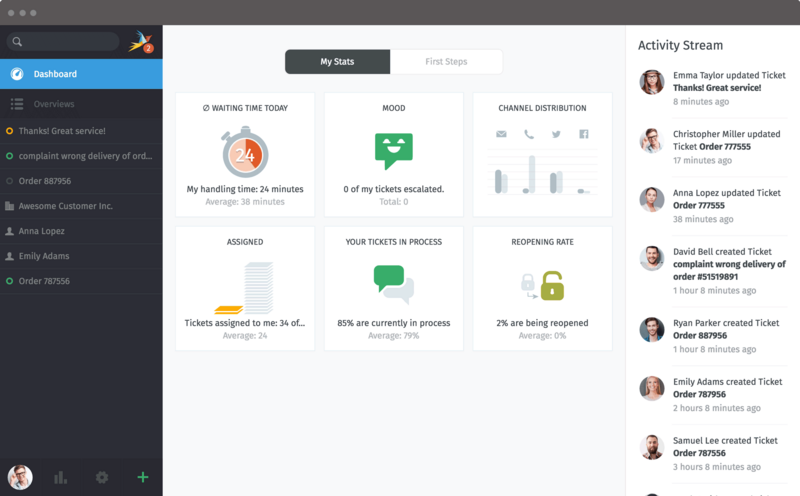
If your primary need is a clear, efficient helpdesk for seamless communication, Zammad is an outstanding choice. It’s built to streamline customer communication across email, chat, telephone, and social media, consolidating everything into a single, intuitive interface.
Zammad shines in its ease of use. Teams can get productive quickly without extensive training, making it perfect for small to medium-sized businesses and SaaS startups. It offers powerful automation out-of-the-box, including time-based triggers, SLA policies, and custom macros to reduce manual workload. For teams that need simplicity, control, and transparent pricing, Zammad is an ideal Jira Service Management alternative.
Ideal for: Customer support teams, internal IT helpdesks, and organizations that prioritize a clean, efficient ticketing system over complex ITIL processes. Key Strengths: Multi-channel support, intuitive interface, strong automation, transparent pricing, and flexible self-hosted or cloud deployment.
5. FreeScout

If you love the simplicity of Gmail but need a proper helpdesk, look no further than FreeScout. It retains all the features you love about email, such as the clean interface, quick replies and familiar workflows, and enhances them with powerful ticketing capabilities, all while remaining lightweight and user-friendly.
FreeScout eliminates the hassle of switching between Gmail and a separate ticketing system. Everything lives in one place:
- When customers email you, it becomes a tracked ticket.
- You reply → it looks like a regular email to them
- Team collaboration happens behind the scenes.
Create a free FreeScout account
How to choose the right tool?
Making the switch requires careful consideration. Beyond the features, here are key factors to guide your decision:
- Deployment Preference: Do you require on-premises hosting for data security, or is a cloud-based solution acceptable? Most open-source tools offer both, giving you the choice.
- Team Size and Technical Expertise: A small team with no dedicated IT staff might prefer the user-friendliness of Zammad. A company wanting a polished, Jira-like tool with good support might choose RedmineUP. A large enterprise with a development team could leverage the power of GLPI.
- Core Requirements: Distinguish between your "must-haves" and "nice-to-haves." Do you need a simple ticketing system or a full CMDB? Is Agile project management a core requirement, or do you need to manage IT assets?
- Total Cost of Ownership: While the core software is often free, factor in the costs of hosting, maintenance, and optional commercial plugins (like those from RedmineUP) if they are necessary for your workflow.
Open Source without the overhead
So when you're looking at these open source Zendesk alternatives, just be realistic about what your team can actually handle.
Got a solid DevOps team with time to spare? They can manage infrastructure, security, and custom builds—so tools like Zammad (self-hosted) or NocoBase give you all the flexibility you could want.
Working with a smaller team but have some PHP and MySQL experience? FreeScout or osTicket are lightweight options that won't overcomplicate things.
But if you like the idea of an open-source Redmine setup—where project management, CRM, and helpdesk all live in one place—but you don't want to deal with maintaining it yourself, RedmineUP is a pretty obvious fit.
At the end of the day, the right open source alternative isn't just about who has the flashiest features. It's about what actually works with your team's skill set and how you operate day to day. And these days, just being "open source" isn't enough anymore—you need a sustainable plan for keeping the thing alive.