
The clock is ticking for Jira Data Center. With Atlassian ending all new self-hosted licenses in March 2026 and pulling the plug completely in 2029, a massive shift is underway. This isn't just an end-of-life notice; it's a fundamental push toward the cloud.
For many organizations, this mandate is the final push to re-evaluate a tool known for its complexity and cost. The search for powerful, flexible, and affordable Jira alternatives has officially moved from a background consideration to a top priority.
The landscape of project management tools, however, has never offered more compelling choices. Open-source software offers many advantages, including low cost, flexibility, transparency, community support, and reliability. Let's explore the most popular open-source platforms in 2026:
.
Why open-source alternatives demand attention
- Budget control. Stop the cycle of rising SaaS fees. By switching to open-source, you turn unpredictable operating costs into a stable, one-time capital investment. This shift locks in major long-term savings and eliminates per-user charges.
- Escape vendor lock-in. Don't let a vendor dictate your software's future. With open-source, you're in charge. You control the features, customizations, and integrations that matter to your business.
- Maintain deployment flexibility. Keep your data compliant and secure on your own terms. Self-hosted solution give you complete authority over your security and infrastructure, all while delivering the powerful features you need.
1. RedmineUP
Take control of your projects with RedmineUP, a highly adaptable open-source platform. It combines robust capabilities—from issue tracking and Agile boards to custom workflows—with an intuitive interface. You get the power to tailor everything to your process, backed by reliable, SLA-guaranteed support.
The advantage of RedmineUP is that you can choose the delivery method: on-premises or in the cloud. You can start in the cloud and migrate to self-hosted with no data loss. RedmineUP consists of the core Redmine functionality plus 18 additional modules that extend it, such as Agile, Helpdesk, CRM, and Resources. The RedmineUP cloud is managed by highly technical support, extremely reliable, and highly secure, as all data is encrypted.
When deciding between cloud or self-hosting, every company is different and will have unique requirements. Choosing cloud or self-hosting raises many questions: Do you have an existing network and server infrastructure? Do you have the technical skills or are Ruby experts? Do you have a secure data center? Do you have a national data policy regarding the physical location of data?
Peter Gaarde, Head of
Software Development It takes time to get into the ‘issue tracking mindset.’ We tried Jira and Trello, but if we had to go all-in, it would be more expensive, and it doesn’t have all the features inside, such as helpdesk or invoicing.
RedmineUP is a great fit for small and mid-sized teams seeking a flexible and customisable project management solution, especially if budget is a concern. It supports both Agile and traditional project management methodologies.
For teams of 25, enjoy monthly pricing starting at $69
Create a free RedmineUP account
2. OpenProject
Take full command of your projects and your data with OpenProject, a powerful open-source platform. It delivers a complete suite of management tools—from issue tracking and Agile boards to Gantt charts and custom workflows—all supported by robust reporting and a vibrant community.
For the ultimate in privacy and control, you can deploy OpenProject on your own infrastructure, safely behind your firewall. This on-premises approach guarantees complete data sovereignty, aligning with both the software freedoms of its open-source license and the strict principles of regulations like GDPR.
For teams of 25, enjoy monthly pricing starting at $191.
Create a free OpenProject account
3. GitLab
For teams seeking an all-in-one DevSecOps platform infused with AI, GitLab is a compelling choice. It consolidates the entire development lifecycle into a single application, eliminating the hassle of juggling multiple tools.
So, which tool is right for you? If your priority is a complete, unified system that spans coding, security, and operations, GitLab is likely the stronger fit. However, if your focus is primarily on task and project management, a solution like Jira might be all you need.
For teams of 25, enjoy monthly pricing starting at $725.
4. Odoo
Odoo is a popular open-source suite designed to bring your entire business operations together. It integrates a wide array of applications—spanning project management, CRM, accounting, and inventory—into one cohesive system. This makes it a powerful, all-in-one solution for streamlining processes in organizations of any size.
For teams of 25, enjoy monthly pricing starting at $329.
5. Redmine
Redmine is a highly flexible, open-source project management tool well-suited for organizations that prioritize customization and cost control. While its interface may feel less modern than commercial alternatives like Jira and it lacks formal technical support, its robust core features are completely free. This makes it a powerful, budget-friendly option for teams with the technical confidence to manage and adapt it themselves.
However, do not forget the cost of maintenance. Free open source software doesn't mean you get to use it for free. For example, compare the 1-year cost of Redmine on-premises maintenance and the RedmineUP cloud subscription.
5. Taiga
Taiga's core differentiator is its philosophy. It was born from a frustration with existing tools that were overly complex and disrupted a team's flow. The goal of Taiga is to be so intuitive that it gets out of the way, allowing teams to focus on their work rather than on managing the tool itself.
For teams of 25, enjoy monthly pricing starting at $70.
Bugzilla
5. Bugzilla
Many teams hunting for a Jira alternative are drawn to modern, agile-focused platforms like Linear or Taiga. Yet there's a different path altogether: the classic, battle-tested tools that value raw functionality and unwavering reliability over a polished facade. Bugzilla is the definitive champion in this category.
Think of it this way: if Jira is a sprawling enterprise command center and Taiga a minimalist agile workshop, then Bugzilla is the industrial-grade press that has been stamping out defects, without fail, for decades. It remains the essential "stop-the-line" defect tracker.
Create a free Bugzilla account
Jira configuration and data migration
For the last decade, the specialists at RedmineUP have perfected the migration process. We use powerful, automated scripts to do the heavy lifting, guaranteeing that your unique plugins and specific data make the jump intact. This hands-off approach lets your team focus on their work, avoiding the risks and headaches of a manual transfer.
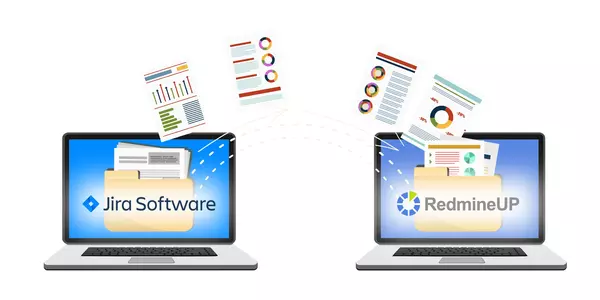
Keep in mind, while community forums are great for general advice, they can't deliver a smooth, complete data migration. That requires the dedicated, professional support of a specialised partner—from day one.
Ready to see your migration plan? Get in touch. Our team of experts will analyze your Jira setup and recommend the best path forward.
To check the migration plan drop us a message. A team of experts will check your Jira environment and recommend the best course of action.