Manny Palachuk is the owner and head of IT at his consulting firm, where he has spent more than two decades shaping the way businesses plan, execute, and grow.
.
With a deep-seated passion for Agile methodologies, Manny doesn’t just build software—he builds strategies. He believes that the future of business lies at the intersection of disciplined planning and Agile execution, a philosophy he calls “Business Strategy meets Agile Execution.”
This belief led him to write the book Getting To The Next Level, in which he guides organizations on using Agile principles to develop and scale their business strategies iteratively and effectively. But Manny is more than an author or consultant—he’s a builder. Since around 2013, he has been crafting a highly customized Redmine platform designed not just for project tracking, but as a full-fledged client portal and strategic operating system.
As both the visionary and the technician, Manny ensures that every component of his Redmine ecosystem works in harmony, supporting not only his team’s workflow but also his clients’ strategic journeys. His story is a testament to how Redmine—when extended with the right tools—can evolve from a simple issue tracker into a dynamic engine for business transformation.
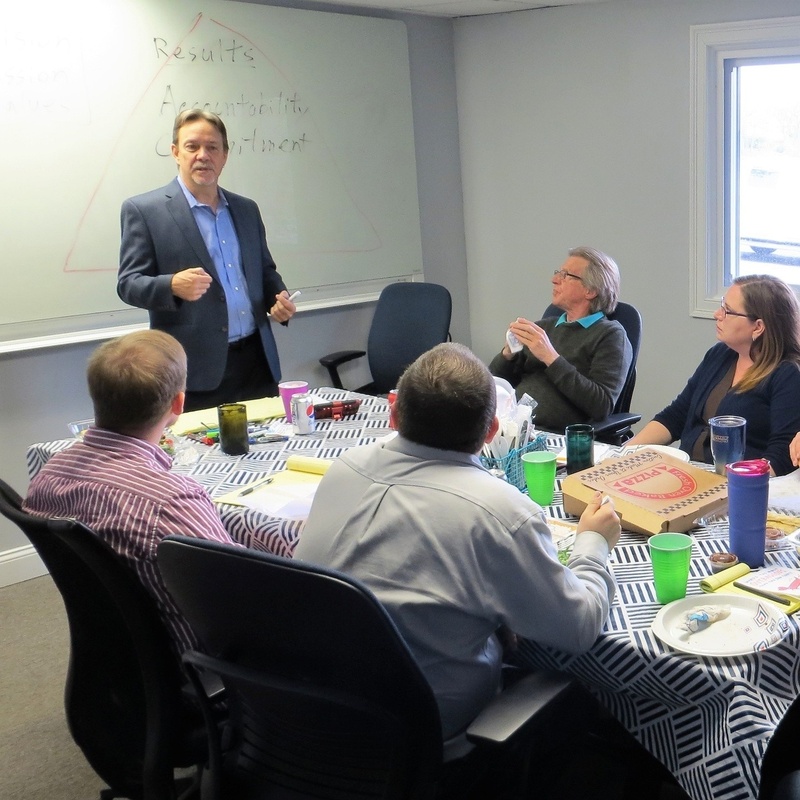
From this case study you will learn the following:
- How to work with Redmine limitation
- How to scale and configure Redmine for Agile
- Redmine maintenance options
- Benefits of Redmine optimisation
Standard Redmine limitation
Before adopting RedmineUp, Manny’s team struggled with a Redmine platform that was rigid and incomplete—a tool built for tracking issues, not for running a modern consulting business. Standard Redmine lacked essential functionality, forcing them to patch together disconnected solutions or simply work around glaring gaps.
Manny Palachuk
Business Coach I've been working with Redmine for over 20 years and when we decided to build our own client portal I spent almost two full years collecting and evaluating the ideal plugin list. Everywhere I turned, I found another useful RedmineUP plugin. If we ran a helpdesk or sold product out of Redmine, we'd be using the full stack. Every time I found a shortcoming of Redmine and began comparing options for plugins, RedmineUP always won due to quality of integration and spot on features list. The entire set is awesome.
Key limitations included:
- No native Agile support. Redmine offered no Scrum or Kanban boards, no sprint planning tools, and no visual workflow management—making it nearly impossible to apply Agile methodologies at the business-strategy level without cumbersome manual workarounds.
- No integrated CRM. Client and contact information lived in spreadsheets or separate tools, creating silos between project data and relationship management. This meant missed follow-ups, fragmented communication, and no single source of truth for client history.
- No structured checklists or Q&A modules. Critical processes—like onboarding, delivery milestones, or internal reviews—relied on ad-hoc notes or external documents. There was no way to standardize procedures, ensure consistency, or capture client questions systematically.
- No cohesive client portal. The platform felt like an internal tool, not a professional client-facing interface. Sharing progress, gathering feedback, or collaborating with clients required messy email threads, manual updates, and insecure file exchanges.
The real cost wasn’t just missing features—it was fractured workflows, lost efficiency, and a limited ability to scale. Manny’s team spent more time managing workarounds than delivering value. They needed more than a patchwork of plugins; they needed a unified, purpose-built ecosystem that could turn Redmine from a simple tracker into a complete business operating system.
Redmine configuration
Manny noted that the configuration process was smooth, with challenges mainly arising from ensuring plugin version consistency during Redmine upgrades. Once aligned, the stack ran reliably.
Manny Palachuk
Business Coach I love checklists, and CRM and Questions, but I'm an Agile guy. Our platform is a customized Redmine to use for Business Strategy Development. So my favorite plugin / function is the Agile plugin. It makes the strategy development come alive.
RedmineUp plugins have been the primary plugin stack since day one, becoming the backbone of their business strategy platform. The workflow has remained stable and scalable over the years.
- Agile Plugin – Bringing Strategy to Life. As an Agile advocate and author of “Getting To The Next Level,” Manny’s favorite plugin is the Agile module. It enables his team to apply Agile methodologies to business strategy development, turning planning into actionable execution.
- Enhanced Collaboration & Project Management. Upgrading to the Pro version of Agile introduced advanced features that simplified managing complex, multi-layered projects. The integration of Checklists, CRM, and Q&A modules further streamlined collaboration and client interaction.
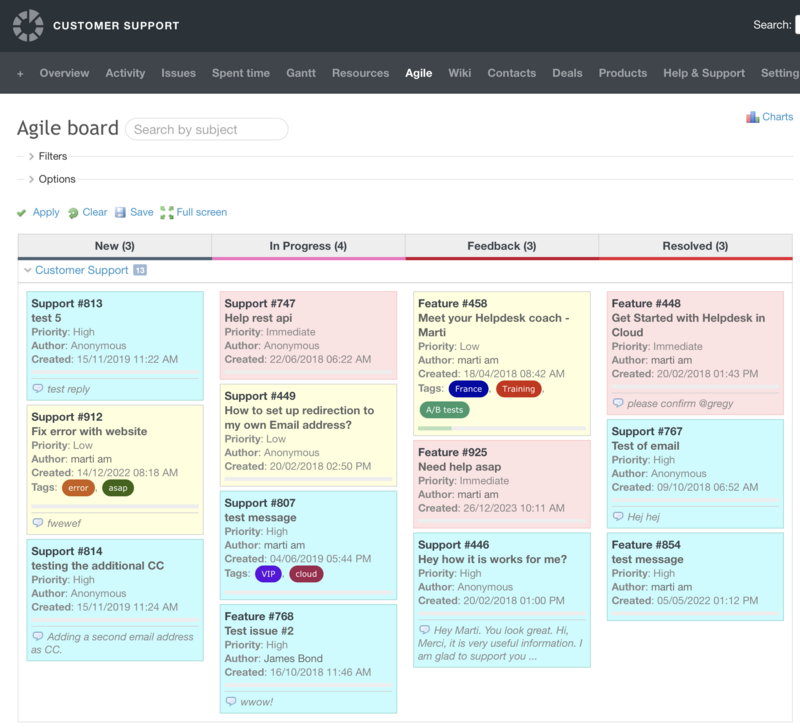
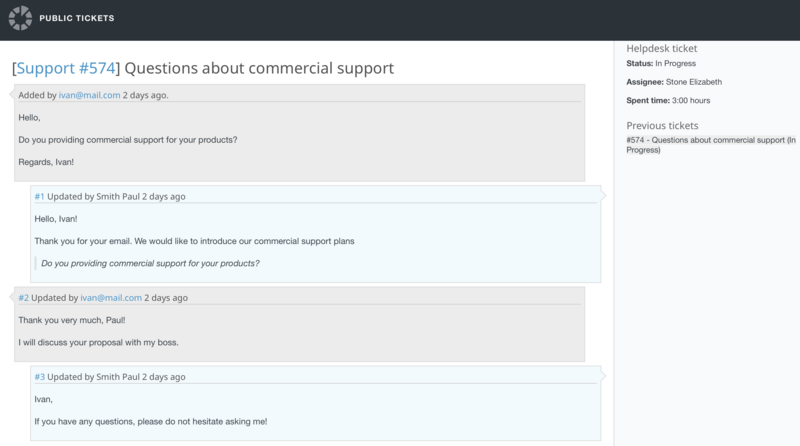
- Configuring the Customer Portal. You can easily create a secure, branded space where clients can view project progress, submit requests, and communicate with your team. With RedmineUP's Helpdesk plugin, this process becomes even more powerful, allowing you to integrate knowledge base and helpdesk directly into the portal for a complete client experience.
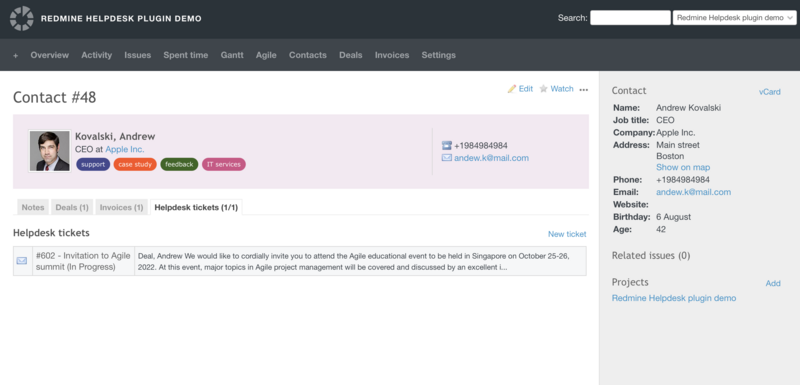
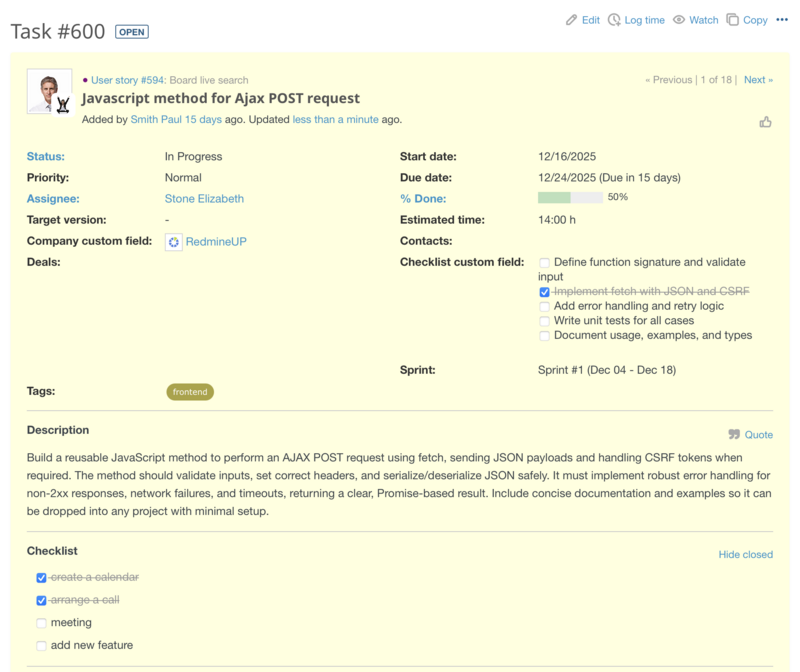
- The RedmineUP Checklist plugin. By allowing dynamic control over checklist visibility, it brings unparalleled clarity and adaptability to they workflows.
Benefits of RedmineUP plugins
Key Redmine plugins benefits:
- Robust, all-in-one platform for business strategy and client management
- Improved project oversight and team collaboration
- Future-ready scalability with consistent updates and compatibility
Redmine configuration and upgrade
The Redmine upgrade process itself can be daunting, with a risk of downtime or unexpected issues. CTOs worry about disruptions to ongoing projects if the upgrade doesn't go smoothly.
Manny Palachuk
Business Coach Almost every problem I have had was when I moved across from Redmine 3.1 to 3.5 to 4.1 to 5 and now to 6. But it was almost always a matter of seeing to it that the stack of RedmineUp plugins were of the same release group. I.e. Always work with the latest available across the stack. With this, the big problems came not from Redmine or RedminUp, but other my Ruby or Gems, etc.
However, with the right approach, you can upgrade Redmine: to the latest version smoothly and without downtime. In this Redmine upgrade guide, we'll walk you through a step-by-step process to ensure a seamless upgrade in 2025.
For our RedmineUP hosting customers, we handle all Redmine updates. We thoroughly test new versions like 6.1.0 for plugin compatibility and deploy them automatically. This saves you time, ensures security, and gives you peace of mind, so your team can just enjoy the latest features.
The most important consideration when updating Redmine is data integrity. It is therefore essential that a data migration plan, including a database backup, is completed by your organisation's CTO. Troubleshooting is an effective method of preparing for plugin conflicts.
We offer Redmine maintenance services. Redmine migration is usually completed within one business day, and performed in suitable time for your team, independent of your timezone. Our expert support ensures optimal setup for your self-hosted RedmineUP Enterprise on-premises edition. Skilled engineers consult on system requirements and guide you through the installation within your infrastructure.
To book the maintenance plan drop us a message. A team of experts will check your Redmine environment and recommend the best course of action.
Conclusion
RedmineUp’s plugin suite enabled Manny’s firm to build a customized, enterprise-grade platform on Redmine—transforming it from a basic project tracker into a dynamic hub for business strategy and client engagement.
A sincere thank you to Manny Palachuk, Business Coach and MSP Transformation Guru, for sharing his invaluable expertise on agile transformation. Your insights are immensely valuable to our community. We wish you continued success in guiding businesses through transformative change.
Ready to transform your Redmine experience? Explore RedmineUP’s plugin suite and see how an integrated ecosystem can elevate your project management, collaboration, and business execution.